
As a Black woman, perfection and resilience feel sewn into the fabric of my being. Although these qualities are often seen as positive, the underlying pressures they carry create a certain fear and caution toward the world around me.
The weight of double, and sometimes triple, standards have a ripple effect, impacting how some Black women, myself included, experience and explore happiness, fulfillment, love, and community.
For me, the intersection of standards like strength vs. vulnerability, professionalism vs. authenticity, success vs. selflessness, and intelligence vs. likeability contributes to several mental “battles” I work through daily.
Strength vs. Vulnerability
To what seems like most people, Black women are expected to bear the weight of whatever life throws at them in silence. We’re “supposed” to be strong, rooted in our history and the reality that systemic barriers often place Black women at the bottom of both racial and gender hierarchies.

The National Education Association defines “racial hierarchy” as the ranking of different races or ethnic groups based on physical and perceived characteristics. The Encyclopedia of Domestic Violence describes a “gender-based hierarchy” as a system rooted in male dominance, placing men above women in status.
(see my chart to the left for a breakdown based my understanding of society).
I’ve often felt the need to “endure” in different situations—whether in relationships with underlying toxicity, or workplaces where I was singled out. The pressure to stay strong rather than speak up is not only normalized but, as I’ve come to realize, deeply internalized.
In my friend group, I’m the “strong friend.” I feel that I have to handle whatever life hands me alone, partly as a form of protection from potential harm or pain. My friends see me this way—I know they do. When I try to be vulnerable, it can feel like a chore, even difficult, to ask for help. I sometimes worry it might change how they see me.
Professionalism vs. Authenticity
Now that I’m in a better workplace environment and culture, I can reflect on the standards I’ve encountered in previous jobs and in the creative endeavors I’m pursuing.
There’s often pressure for Black women to “show up” in a certain way at work that may not fully reflect who we are. It affects things as personal as how we wear our hair, how we speak, and how we express our culture in these spaces.
When I worked in retail, these double and triple standards were clear. I was laid off in 2019 as a college sophomore for not being “outgoing” enough for the establishment. This type of judgment, and the code-switching Black people often have to navigate, reflects these ingrained pressures.
Though things are better in my current career, there’s still that pressure to watch what I say and how I say it. Working in media, where my voice is a main part of my job, I worried at first that my Southern accent and natural style might be judged.
This reminds me of W.E.B. Du Bois and his concept of “double consciousness,” which he described as “this sense of always looking at one’s self through the eyes of others.” I believe Black women navigate double consciousness at high rates, likely more than most people.

This longing to be my authentic self is growing, but constantly seeing myself through others’ eyes has impacted the creative projects I’ve dreamed of for myself.
Success vs. Selflessness 🤝🏾 Intelligence vs. Likeability
As a young Black woman who considers herself “high-achieving,” I’ve noticed that this quality can make me seem “intimidating,” especially to men. Black women are among the most educated and ambitious, but somehow these traits can be seen as “too much.” Meanwhile, we’re also expected to be there for others and to do so without any hesitation.
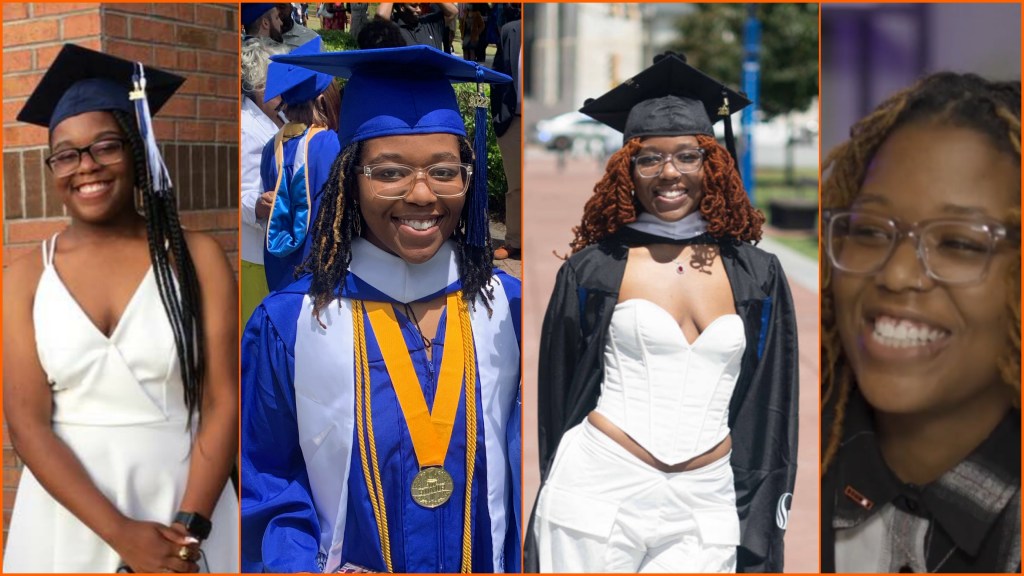
This standard has played out in my dating life. Granted, my dating life is a bit “meh,” but when I’m with men who don’t share the same ambition or drive, this triple standard comes to light.
In my most recent relationship, my ex had some drive, but as someone who genuinely wants the most out of life and my career, it was clear that my success was “too much.” Meanwhile, I was expected to put up with “toxic” behaviors like disrespect, manipulation, and even cheating.
This issue is closely tied to standards around intelligence and likeability. My ambition and drive were seen as a threat, as my ex once admitted, saying he felt like he was “riding my coattail.”
Looking back, I realize I may have downplayed my goals—like becoming a journalist, moving to a bigger city, and getting my master’s degree—just to make him feel comfortable. I used my talents to support him, but in doing so, I often felt “tolerated” rather than genuinely valued.
Closing Thoughts
I wanted to highlight a few of the double and triple standards that Black women experience, especially the ones I’ve encountered now that I’m 24.
I’m turning inward to hear my own voice outside of societal pressures and the noise of the Internet. I hope this piece encourages you to think critically about the standards Black women face, both within our communities and in the wider world.
 BabyTalkTV
Leave a comment